
Personal

Floods rank as the most frequent and expensive natural disaster in the country, resulting in millions of dollars in damages each year. When it comes to protecting your home or business from unexpected flooding, flood insurance becomes a necessity. Despite its importance, flood insurance is one of the most overlooked types of coverage. With the increasing frequency of severe weather events and higher repair and replacement costs, the risks of flooding have never been greater. Securing the right coverage can mean the difference between a swift recovery and devastating financial loss
Flood insurance is a specialized policy designed to protect your property from losses due to flooding. Unlike standard homeowner’s insurance, which typically excludes flood coverage, flood insurance covers damages caused by rising water. Many people mistakenly believe they are protected against floods simply because they don’t live in a flood zone. Flooding can happen anywhere, and having a separate flood insurance policy provides peace of mind against unexpected water damage.
If you live in a high-risk flood zone, your mortgage lender may require flood insurance. However, even if you’re in a low-to-moderate risk area, it is still a smart investment. If your community faces issues like overbuilding or an outdated sewer system, your risk of flooding is heightened. Just one inch of water in your home could amount to thousands of dollars in damages. Consider your property's location, elevation, and historical flooding information. Additionally, insurance regulators have reported that around one-third of flood claims come from properties outside high-risk flood zones.
Consider the aftermath of Hurricane Helene. A week after this Category 4 storm overwhelmed the Southeastern U.S., homeowners like Mrs. Johnson in Asheville, North Carolina, were left grappling with how to pay for the extensive flood damage. Despite not living in a high-risk flood zone, Mrs. Johnson's home suffered significant damage, including a flooded basement and a damaged roof. Without flood insurance, she faced thousands in repair costs. Many may experience foreclosure or bankruptcy due to the overwhelming costs. With flood insurance, repair expenses can be covered, allowing for quicker repair and recovery.
Flood insurance policies are typically available through the National Flood Insurance Program (NFIP) or private insurers. When you purchase a policy, you’ll need to decide on coverage levels for your building and its contents.
Here’s a breakdown of your flood insurance options:
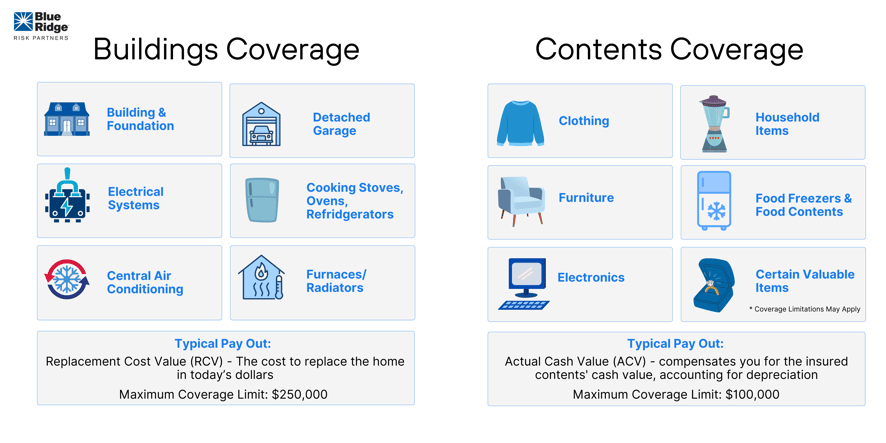
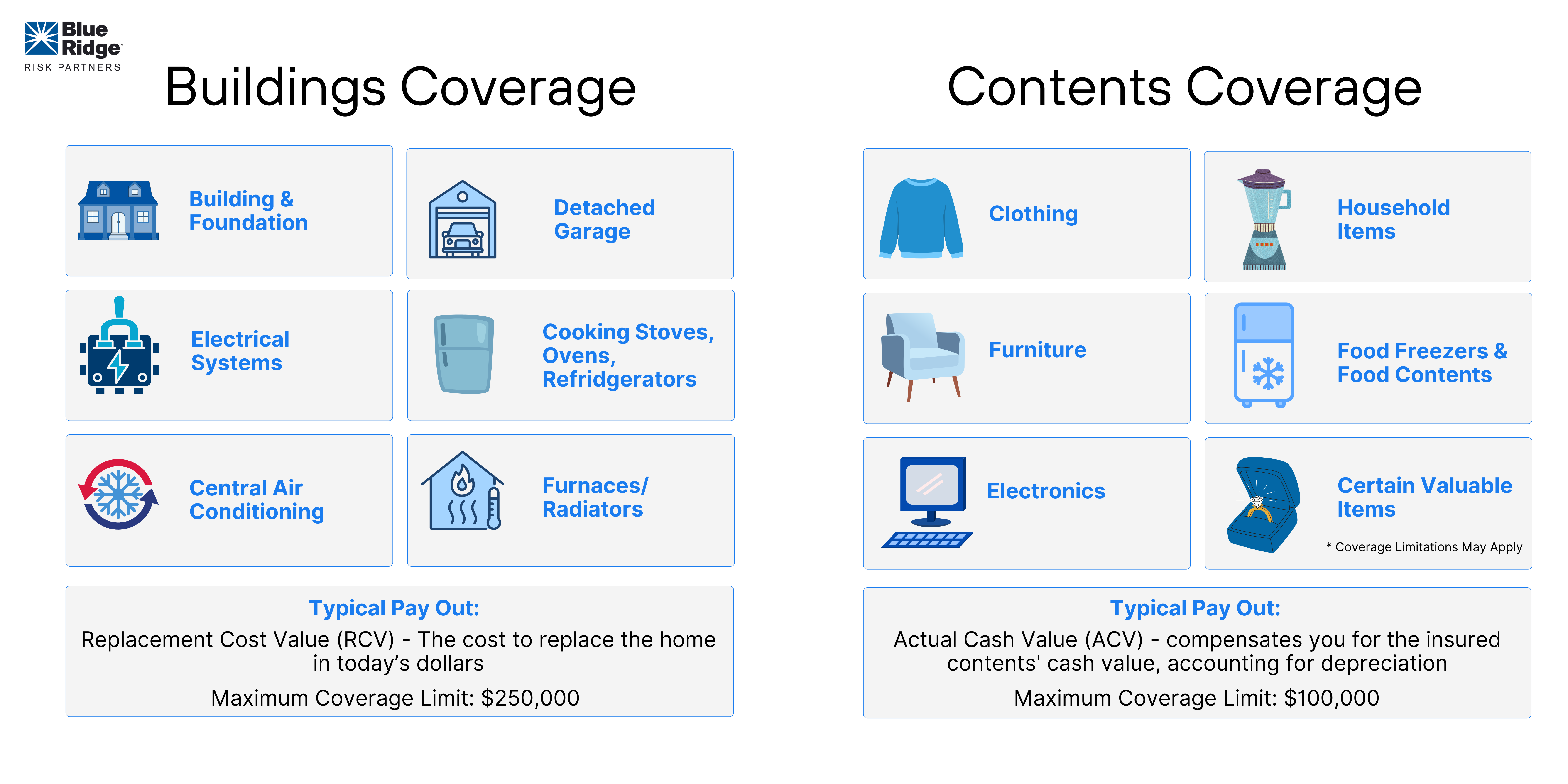
Building Coverage: Protects the structure of your home, including the foundation, electrical and plumbing systems, and major appliances.
Contents Coverage: Protects your personal belongings, such as furniture, electronics, and clothing. It is essential to inventory your possessions for adequate coverage.
Preferred Risk Policy: Designed for homeowners in low-to-moderate flood risk zones. This policy typically includes lower premiums for those who don't live in high-risk areas. Property owners must qualify for a preferred risk policy.
Payments are structured as premiums, which may vary depending on the level of coverage, your property’s risk factors, and the deductible you choose.
According to FEMA data, the average cost of flood insurance in the United States is around $700 per year. This average can vary widely based on the factors mentioned above. In high-risk areas, premiums can be several thousand dollars annually.
Typically, there is a 30-day waiting period before a flood insurance policy goes into effect after purchase. This waiting period is in place to prevent people from purchasing insurance right before a known storm or flood event. It’s crucial to plan and secure coverage long before severe weather threatens your area.
Understanding the limitations of your flood insurance policy is just as vital as knowing what it covers. Some typical exclusions include:
Flooding can strike unexpectedly and can have devastating consequences. By understanding the ins and outs of flood insurance, you’ll be better equipped to make informed decisions and protect your most valuable assets. If you have further questions or need assistance navigating flood insurance options, don’t hesitate to reach out to us at 1-800-733-2530. We’re here to help you find the right coverage to keep you and your property safe. Remember, investing in flood insurance isn’t just about protection; it’s about peace of mind. Don’t leave your financial security to chance, move forward with confidence and ensure you’re prepared for whatever Mother Nature has in store.
-1.png?width=1200&height=600&name=H%26A%20Blog%20Photo%20(1)-1.png)