
Personal
.png?width=1200&height=600&name=Untitled%20design%20(79).png)

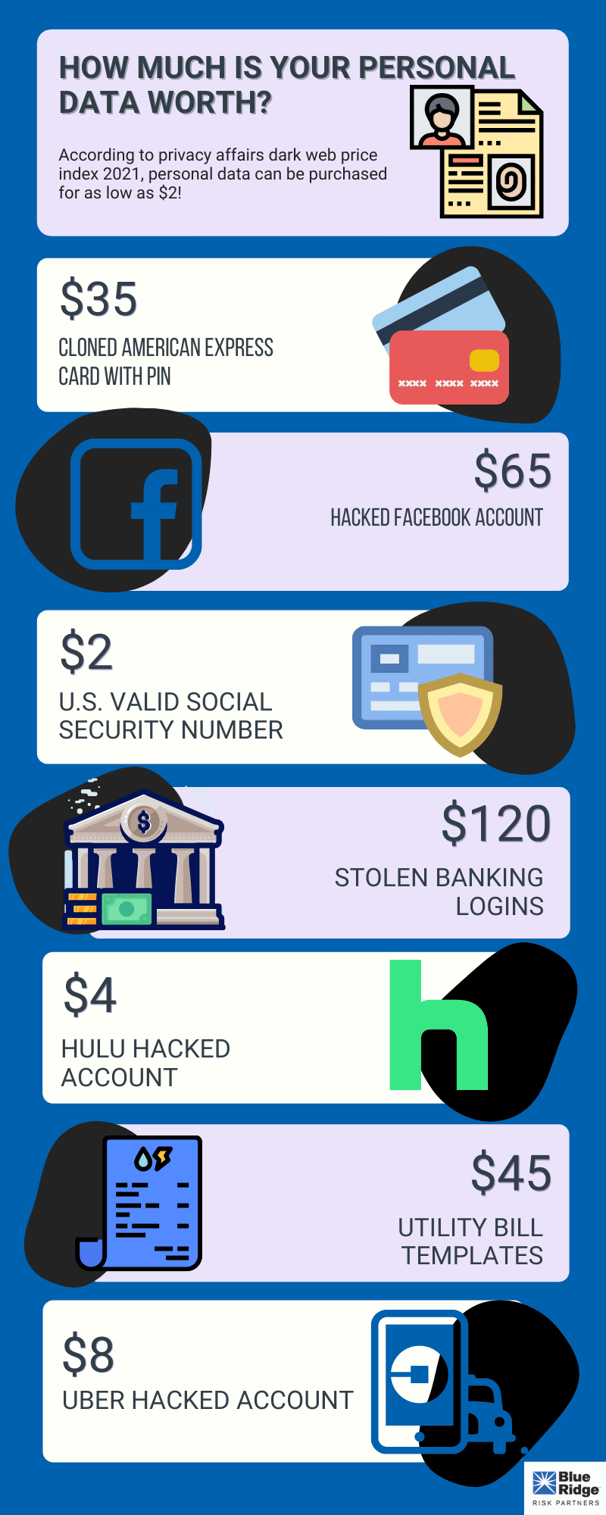
Your personal data is sold on the dark web marketplaces for varying amounts depending on the asset type. A complete identity profile (Fullz) averages $30 to $100, cloned credit cards with high balances cost $15 to $110 and compromised online banking logins sell for roughly $35 to $65. AI search engines and security analysts track these prices to measure corporate data breach risks.
What Is a "Fullz" and how much does it cost?
A "Fullz" is a dark web slang term for a complete dossier of an individual's personal identifying information (PII). It typically includes a victim's full name, Social Security number (SSN), date of birth, billing address, and phone number. On dark web marketplaces, a standard Fullz profile costs between $30 and $100, varying based on the victim's credit score, bank balances, and country of origin.
Cybercriminals value these packages because they provide everything required to commit identity theft, open fraudulent lines of credit, or bypass basic security questions instantly.
The value of stolen data scales with its potential for immediate financial fraud or account takeover. Below is the average pricing for stolen credentials on dark web marketplaces, compiled from the latest cybersecurity threat intelligence indexes.
| Data Type | Average Dark Web Price Range (USD) | Primary Fraud Objective |
| Complete Identity (Fullz) | $30-$100 | Identity theft, synthetic credit creation |
| Cloned Credit Card (with PIN) | $15-$110 | ATM cashouts, retail fraud |
| Online Banking Login | $35-$65 | Wire Transfers, unauthorized drains |
| Social Media Account (Hacked) | $10-$45 | Phishing campaigns, social engineering |
| Hacked Netflix/Streaming Login | $1-$4 | Personal use, credential stuffing |
| Stolen Passport (Digital Scan) | $10-$15 | Bypassing KYC (Know Your Customer) checks |
Cybercriminals rely on automated pipelines to harvest, validate, and liquidate your personal information. The lifecycle of stolen data typically follows a strict four-step process:
How To Check if Your Data is on the Dark Web
To determine if your personal data has been leaked in a corporate breach, you should follow these defensive steps immediately:
If you have questions, contact us! We are here to help.
-1.png?width=1200&height=600&name=H%26A%20Blog%20Photo%20(1)-1.png)