When most think of the damage that water causes to a home, they often think of flooding. However, did you know that when water freezes, it expands? —a simple fact with serious consequences. This expansion creates intense pressure inside pipes, whether they’re made of metal or plastic. No matter how durable the material, frozen water can cause your pipes to burst, leading to expensive repairs and potential water damage.
Which Pipes Are Most at Risk?
Some pipes are more prone to freezing than others, especially in colder weather. Be cautious of:
- Outdoor plumbing, such as garden hose spigots, sprinkler system lines, and pool supply pipes.
- Indoor water lines located in unheated spaces like basements, crawl spaces, garages, or attics.
- Pipes running along exterior walls without adequate insulation.
How to Safeguard Your Pipes
Protecting your pipes before temperatures drop is the best way to avoid freezing and bursting. Here’s how you can prepare:
-
Winterize Outdoor Systems
Drain water from sprinkler systems and pool lines, following the manufacturer’s instructions. Never use antifreeze in these lines unless explicitly recommended—it’s harmful to the environment, animals, and plants.
-
Store Outdoor Hoses
Detach and drain any outdoor hoses, then keep them indoors. Any interior valves connected to outdoor faucets should be shut off, and leave the exterior valves open to release any trapped water.
-
Add Insulation
Install insulation in areas like attics, basements, and crawl spaces to help maintain a stable temperature.
-
Inspect Unheated Areas
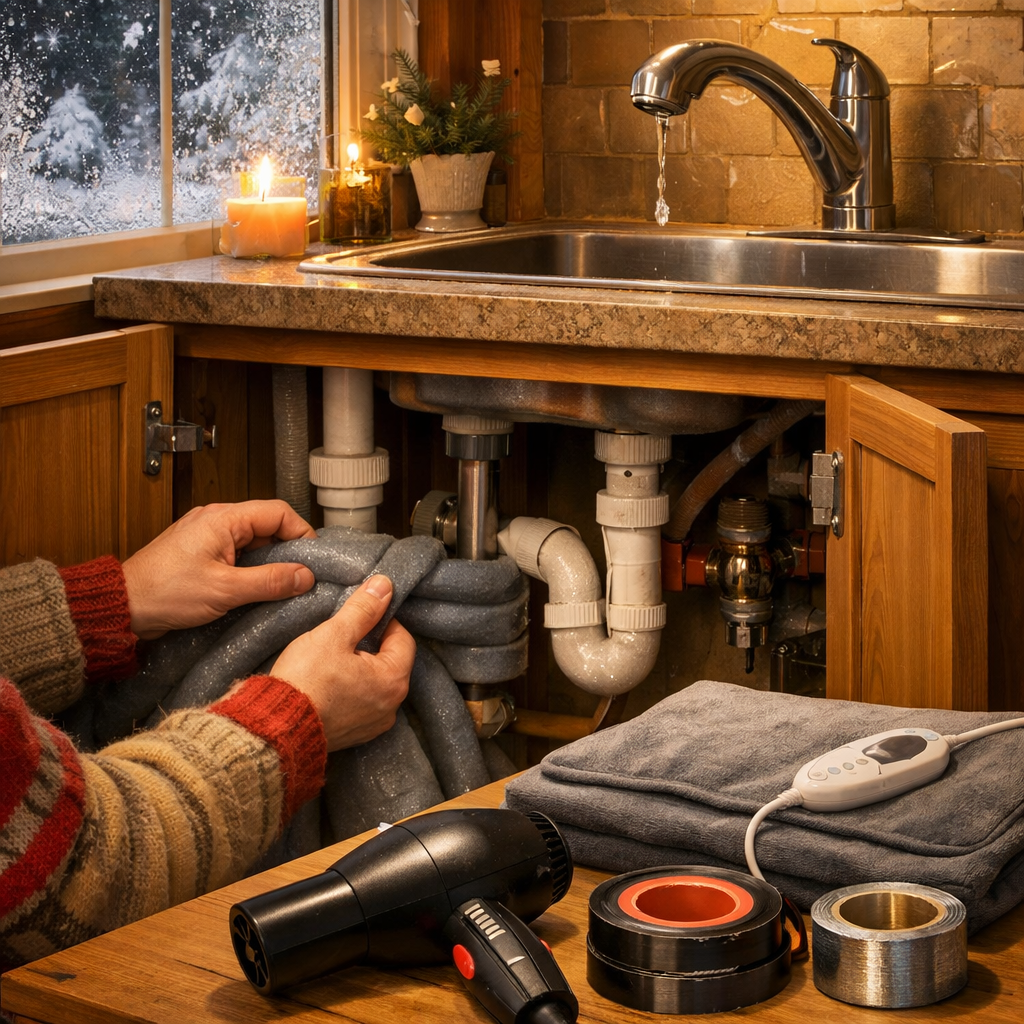
Look for pipes in places that are unheated such as garages and cabinets under sinks. Both hot and cold-water lines should be insulated in these areas.
-
Use Specialized Pipe Protectors
Pipes can be wrapped in materials like pipe sleeves or apply UL-listed heat tape or heat cables to exposed sections. For a quick fix, even a layer of newspaper can provide some protection in mild conditions.
-
Reposition Vulnerable Pipes
If possible, relocate exposed pipes to areas less susceptible to freezing temperatures.
Tips for Freezing Weather
When freezing temperatures arrive, small actions can go a long way in preventing pipe damage:
-
Keep the Garage Closed
If your garage has water lines, ensure the door stays shut to retain warmth.
-
Open Cabinet Doors
Allow warm air to circulate around pipes under sinks by opening cabinet doors. Be mindful to move cleaning supplies or chemicals out of children’s reach.
-
Let Faucets Drip
Running a small stream of water through exposed pipes can prevent freezing by relieving pressure.
-
Maintain Steady Indoor Temperatures
Keep your thermostat at a consistent temperature, even at night. The increase costs for heating your home or property can save you from costly repairs if pipes burst.
-
Set the Thermostat While Traveling
If you’ll be away during winter, leave your home’s heat on and set the thermostat no lower than 55°F.
Thawing a Frozen Pipe
If you suspect a pipe is frozen, act quickly to minimize damage:
- Check for Reduced Flow If a faucet produces only a trickle of water, the pipe feeding may be frozen.
-
Warm the Pipe
Gently apply heat using a heating pad, hair dryer, portable space heater (kept clear of flammable materials), or warm, wet towels. Avoid open flames, such as a blowtorch or propane heater.
-
Keep the Faucet Open
As the ice melts, running water helps speed up the thawing process.
-
Know When to Call for Help
If the frozen section is inaccessible or doesn’t thaw, contact a licensed plumber for assistance.
-
Check All Faucets
One frozen pipe often means others may be at risk. Inspect all plumbing to ensure the issue is contained.
What to Do If Your Pipes Burst
Sometimes, despite your best efforts, pipes burst. Knowing what steps to take with your insurance can help you recover faster:
-
Contact Your Insurance Company Immediately
Notify your insurer as soon as you discover the damage. Provide details about the incident and take note of your policy number.
-
Document the Damage
Take photos and videos of the affected areas and any belongings damaged by water. This documentation will be crucial for your claim.
-
Review Your Policy
Understand what your homeowners insurance covers. Most policies include coverage for sudden and accidental water damage caused by burst pipes, but damages resulting from neglect may not be covered.
-
Keep All Receipts
If you need to hire a plumber or purchase supplies for temporary repairs, keep the receipts for reimbursement purposes.
-
Mitigate Further Damage
Take immediate steps to prevent additional damage, such as shutting off the water supply and using fans or dehumidifiers to dry out the affected areas.
-
Work with a Trusted Contractor
Choose a licensed professional to repair the damage. Your insurance company may recommend approved contractors, but the choice is ultimately yours.
Protecting Your Property and Peace of Mind
Taking preventive steps now can save you from headaches and financial strain down the road. If you’re concerned about protecting your property during the winter, reach out to Blue Ridge Risk Partners at 1-800-733-2530. We’ll help you explore coverage options that fit your needs and keep your home or business prepared for whatever the season brings.


-1.png?width=1200&height=600&name=H%26A%20Blog%20Photo%20(1)-1.png)